How EV body design reveals a global technology divide

The real secret to a winning EV race might be its hidden skeleton and a brewing materials war among automakers. By Prasad Kulkarni
The electric vehicle (EV) market is accelerating faster than ever, but beneath the sleek exteriors of Tesla Model Ys, Nio ES6s, and Volvo EX90s lies a hidden story: automakers worldwide are building EV bodies in fundamentally different ways. A comprehensive analysis of 44 mid-size EVs reveals that regional design philosophies, not just market preferences, are shaping the future of vehicle architecture.
The Weight Conundrum
When engineers at Chevrolet Blazer EV and Kia EV9 design their body-in-white (BIW), they’re thinking protection and rigidity. American OEMs are building heavier bodies that average 481.5 kg and prioritise structural robustness. Meanwhile, Chinese automakers developing the Leapmotor and Nio models are hitting similar performance targets with lighter shells, sometimes 100 kg less.
For EVs, every kilogram matters. Heavier bodies demand larger battery packs, which increases costs and reduces driving range, yet heavier structures offer benefits too: superior crash protection and reduced noise, vibration and harshness (NVH). This tension defines the EV engineering landscape today.
The data shows a clear split: North American vehicles average 350 kg BIW weight, while European models come in at 372 kg. US-based designs push toward 481 kg. That 130 kg difference isn’t random; it reflects fundamentally different engineering priorities shaped by regulatory environments, consumer expectations, and manufacturing capabilities.
The Stiffness Story
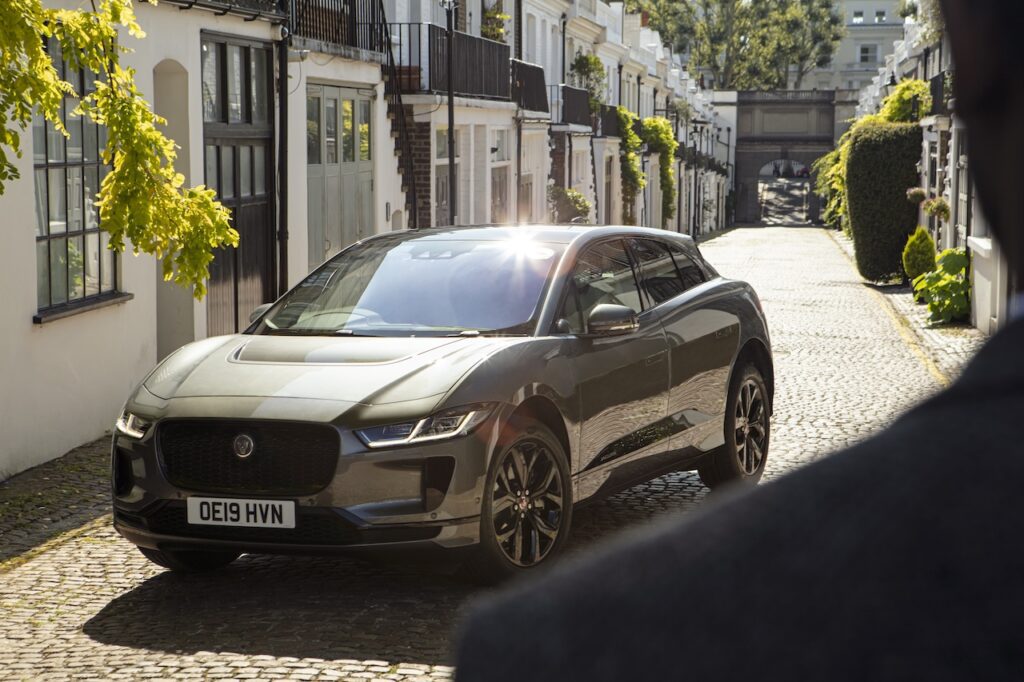
Here’s where it gets interesting: stronger doesn’t always mean stiffer. The relationship between BIW weight and torsional stiffness—a measure of how much a body resists twisting during corners or impacts—is surprisingly weak across the dataset. The Jaguar I-Pace achieves remarkable stiffness with a svelte 260 kg BIW through advanced materials. Meanwhile, the Volkswagen ID.6 X carries 490 kg but doesn’t dramatically outperform lighter competitors in rigidity metrics.
This revelation upends conventional wisdom and suggests that material selection, weld quality, and structural geometry matter far more than brute mass. Chinese OEMs like Leapmotor are matching or exceeding Western competitors in stiffness despite using less material. They’re achieving this through strategic use of advanced high-strength steel, precision spot welding and optimised load paths, proving that Chinese manufacturing isn’t just catching up; it’s innovating.
Material Revolution
The materials story is where the most dramatic divergence emerges. Aluminium content in BIWs varies wildly: the Nio eS7 uses 47.69%, while the Audi e-Tron uses only 2.22%. This isn’t an oversight; it reflects different technology roadmaps and cost structures.
Chinese EV makers are aggressively adopting aluminium to reduce weight and improve thermal management, which is critical for battery cooling. European OEMs, investing heavily in high-strength steel welding technology, are achieving competitive weight savings through precision stamping and joining rather than material substitution. American manufacturers fall somewhere in between, balancing both strategies.
The Efficiency Championship
When BIW weight is calculated as a percentage of total vehicle weight—a true measure of structural efficiency—the Austrian-made Jaguar I-Pace dominates at 11.55%. China’s Nio eS7 follows at 13.94%, while American vehicles average 19.89%. That gap represents more than 150 kg across a vehicle’s life—significant for fleet efficiency and operating costs.
This efficiency gap suggests Chinese manufacturers have developed more advanced optimisation algorithms, better modelling software, or superior manufacturing precision. Or perhaps they’re simply willing to sacrifice some structural robustness for efficiency gains that consumers increasingly value.
What This Means for the Industry
The BIW analysis reveals three distinct playbooks:
- The American Approach: Build it strong, build it heavy. Accept the battery and cost penalties to maximise durability and safety margins.
- The European Approach: Balance performance and weight through advanced materials science and precision manufacturing. High-strength steel replaces aluminium where possible to maintain cost control.
- The Chinese Approach: Aggressive weight reduction through material switching and optimisation algorithms, enabled by lower labor costs and advancing manufacturing precision.
No approach is inherently superior, and each reflects regional circumstances. But the competitive implications are clear: EVs from different regions will behave, handle, and perform differently in real-world use.
As EV competition intensifies, the BIW becomes a battleground for efficiency, cost, and performance. The manufacturers who master this hidden architecture—making bodies that are strong, light, and affordable—will win the EV wars of the next decade. Tesla’s Model Y, with its balanced approach to weight, stiffness and efficiency, represents a template that may define the future of global EV architecture.
The silent revolution is happening in body shops worldwide. Those paying attention will see it coming.
The opinions expressed here are those of the author and do not necessarily reflect the positions of Automotive World Ltd
Prasad Kulkarni is Manager of Body Structures at Mahindra Automotive North America
The Automotive World Comment column is open to automotive industry decision makers and influencers. If you would like to contribute a Comment article, please contact [email protected]
link

/tpg/sources/1569a165-a771-47f4-b1c4-fc3f898f6de3.jpeg "Mumbai Emerges As Global Hub For Tech And Education")